
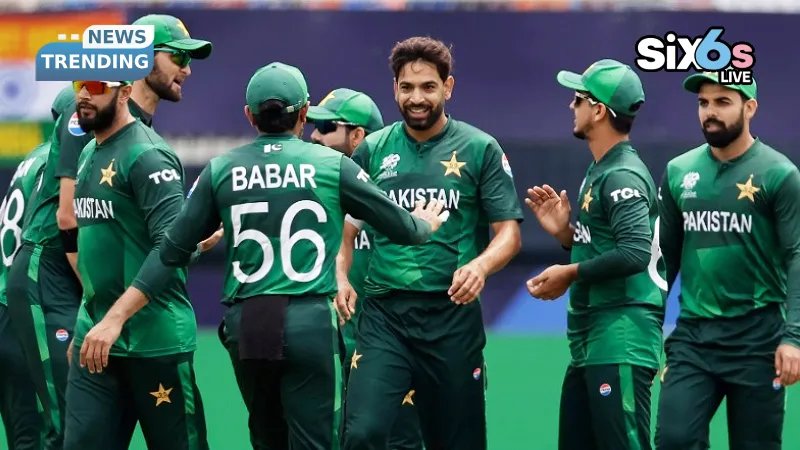
Pakistan’s path is clear but unforgiving in the upcoming T20 WC. They must likely win all three Group A fixtures to stay alive. India’s forfeit leaves them chasing points and net run rate from the outset, thereby tightening their chances of qualifying for the Pakistan World Cup. With games against the Netherlands, the USA, and Namibia in Colombo, this becomes both a results race and a control-of-margins contest. Add questions around selection, spin-friendly conditions, and recent form trends, and the Pakistan Group A scenario T20 World Cup quickly turns into a must-win sequence rather than a gradual build.
Two-Point Deficit Shapes T20 World Cup 2026 Qualification Math
The way you begin a tournament is a large factor in the type of strategy that is chosen for your team. Pakistan can’t absorb bad starts to the tournament or early losses, so each game will be an elimination for them. In order to advance, Pakistan will have to win at least three games, and the amount of runs they win by will be critical due to the fact that net run rate will be used to break ties if two or more teams finish with the same number of wins. This added pressure to play aggressively will force Pakistan to either try to get big totals batting first and chasing early to limit their over count and maximize their chances of winning.
Form Profile: Volume With Caveats
Pakistan enters with a large volume of T20Is (34), having won 24 in the last nine months. A high volume of matches indicates both rhythm and established combinations; however, context needs to be considered, as some of those series were played vs. non-elite or weaker opposition. Confidence building through wins does not fully replicate the pressure associated with competing at an ICC tournament level. The key takeaway from this Pakistan squad analysis T20 World Cup is balance: they are ready for competition, with their performance likely being consistent due to their match fitness and cohesion, but will have to demonstrate they can perform efficiently when opposing teams choose to slow the pace of play and attempt to force errors during the middle overs.
Colombo Conditions Favour Spin Control
Travel-related fatigue is greatly diminished with all Colombo venues allowing for consistent preparation cycles. In general, Sri Lanka has historically featured lower and slower pitches that favor bowlers who can alter their speeds and lengths as opposed to just relying on fast bowling. Therefore, control-type spinners and creative team selections will be at an elevated premium. As such, Abrar Ahmed’s recent ability to generate runs and take wickets fits into the model that Pakistan can utilize to have a middle overs strategy to limit opposition scoring opportunities and create a total that is difficult to chase. We anticipate a slow start (conservative) and then a period of steady accumulation and finally a late charge, a format which reduces the risk of early collapse while creating several defendable totals.
Batting Order Questions Remain Key
The clarity of a player’s selection can determine their performance. Fakhar Zaman’s position outside the power play will be limiting on the level at which he impacts games. Similarly, Pakistan’s internal debate surrounding Babar Azam’s position has been about finding the right tempo as opposed to solely seeking to promote him as a top-class batsman. There is likely to be a role-based approach in how Pakistan selects their side to maximize the use of the fielding restrictions available in terms of aggression with their opening batsmen, to provide stability through the middle overs, and to have the correct finisher(s) to close out difficult games.
Opposition Trap Risk in Group A
The Netherlands, the United States of America, and Namibia have no history as traditional “heavyweight” teams; however, they do have a long history of bowling with discipline and creating a low-scoring game environment to help close the gap and create pressure. To avoid falling into the trap of being in an easy match for Pakistan and turning it into a scramble for survival. In this way, efficiency will outshine entertainment and maximize Pakistan’s T20 World Cup 2026 qualification chances.
In order for Pakistan to make the round of 12, they will have to be able to contain the middle overs with the ball and structure their batting based on roles as opposed to reputations. As soon as Pakistan slips up in either of these areas, the early deficit will become too much to overcome. It can be expected that Pakistan will be playing cautiously and pragmatically, and looking at their chances based on percentages rather than risk, and this approach should help Pakistan stay in the mix.
We’re more than news—we’re your hub for the latest cricket updates, in-depth analysis, and passionate debate. Be part of the community that lives for the game.