
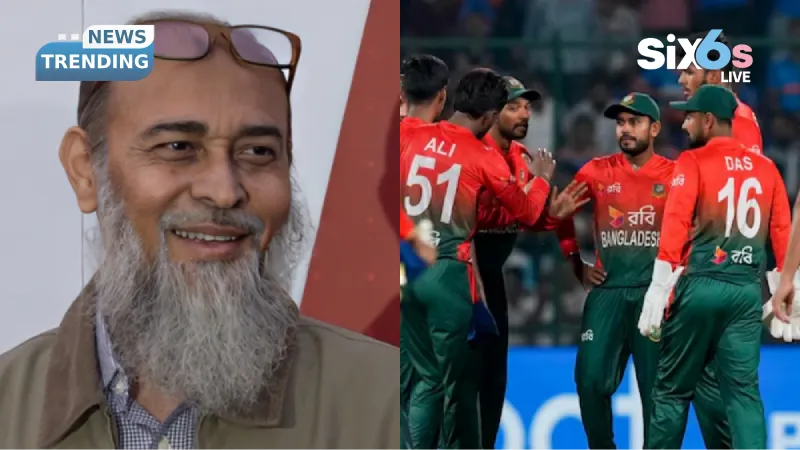
This is nothing new for Bangladesh cricket; however, it is an embarrassment to the level of chaos that is normally associated with the sport. Even by those standards, this one hurts. The boycott was just several days ago, and players had put their tools down in a rare unified boycott. Now, the Bangladesh Cricket Board (BCB) has quietly reneged on a promise made to help ease the storm that was brewing. Nazmul Islam is again the chairman of the finance committee, the same position he was fired from when he made disparaging remarks about the Bangladesh Premier League (BPL), which led to a boycott of all domestic cricket on January 15.
When Damage Control Becomes Déjà Vu
The BCB’s explanation is based upon the procedural aspect of the matter as Disciplinary Committee Chairman Faiazur Rahman stated “Islam’s response to the show cause notice has been considered satisfactory” which will enable his reinstatement, although this is a procedural issue only governing body for Cricket cannot operate in a vacuum; the boycott was not caused by paperwork, the boycott was caused by the lack of faith in the governing body. Restoring Islam at this time causes a reopening of the exact wound that the BCCB has claimed they have sewn closed.
Power, Convenience, and the Empty Chair Problem
The candor displayed by senior vice-president Shakhawat Hossain is possibly the most telling part of this story. He acknowledged that BCB President Akram Khan used his position as president to reinstate Islam because “nobody wants to take the responsibility of being on the Finance Committee.” In other words, institutional ease was given preference over institutional integrity. Calling Islam “honest” may well be a character reference; however, it avoids the central question of player accountability vs. administrator availability.
Players United — Then Politely Ignored
Historically, there has been little collective action by Bangladeshi cricketers. That is why the January boycott was so unusual, as it represented unity and immediacy. All levels of players (BPL pros; first division) were on the same page when they said the simple truth that respect matters. Reinstating players could also teach them an even more dangerous lesson that player solidarity will lead to temporary concessions to the players, while structural decisions are always made despite player input.
A Board Already Fighting Fires
This controversy has not developed independently of other events; at the same time as the board was voting on the appeal by the Bangladesh Premier League (BPL) administration against its own governing body, audit committee chairman Mokhlesur Rahman resigned over his alleged involvement in the scandal surrounding the BPL, and director Ishtiaque Sadeque stepped down, citing “personal reasons.” If there were some indication that governance instability was merely an isolated event, the decision to reinstate a person who was involved in recent disputes would appear to be a means of resolving one crisis by escalating another.
The reversal of the decision on Nazmul Islam will be seen as a matter of administration but also as a strategic error. It can be said that for many years, Bangladesh Cricket has been attempting to show that they are professional (improved infrastructures, competitive national teams, and internationally marketing their BPL). However, the optics of how they govern themselves lags behind their ambitions.
Authority can sustain boards, but trust sustains systems; therefore, by going back on a public promise made to the players, the BCB could reinforce the notion that dialogue in Bangladesh Cricket is performatory (for show) as opposed to being binding. The true cost of this action may not be immediately obvious (the current protest), but rather cynicism, a slower and more insidious outcome that will take longer for the BCB to feel.
Stay updated on the latest cricket news and exciting updates at Six6slive. Dive into our in-depth articles and analyses to connect with the action today!