
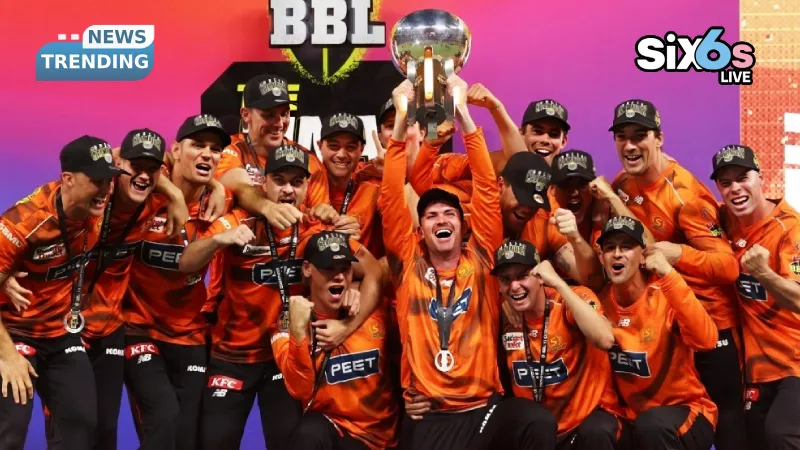
Opponents are finding it difficult to accept that, as they go about their day-to-day lives, there’s an almost unexplainable sense of unease about a team who continue to win, no matter what the weather conditions were like, how the toss went down, or what dramatic twist had occurred throughout the competition. The Perth Scorchers have become the most consistent ‘inevitability’ in the Big Bash League. Win bowling first, bat first, and chase under the rain – they find a way to win all three scenarios. As such, by the time the fireworks went off around Optus Stadium, the feeling of familiarity was already very apparent in this game.
Optus Stadium Is a Tactical Weapon
Perth’s home success in this BBL should not be a mystery, yet it keeps recurring. Optus Stadium lends itself to a team that can control games through disciplined application and clarity of plan, and there are few teams better than the Scorchers. The Scorchers don’t simply bowl quickly at Optus; they bowl effectively. They deliver hard length, wide, slower balls, and consistent pressure in the middle overs to create a strategic trap for their opponents.
The Sydney Sixers had been bowled out for just 66 by the halfway mark of the game, not due to reckless cricket, but due to being choked. Perth’s bowling unit knows Optus is all about creating collective pressure as opposed to relying on a quick collapse. This knowledge gap is what makes the biggest difference between Perth and its competitors.
The Steve Smith Moment That Changed Everything
The final can be won/lost on one individual decision/demotion, and this one happened very early. Steve Smith, who had previously shown some confidence with the bat in his PowerPlay cameo, was looking to take control. Two fours off Mahli Beardman, followed by a four and a six off Jhye Richardson, indicated that momentum was going in the Sixers’ favour.
But Perth were able to put a stop to that momentum with authority. Aaron Hardie’s appeal, which was supported by a confident review, resulted in Smith being dismissed lbw for 24. This was not just the removal of the wicket; it was also the removal of a great deal of pressure. Once the wicket of Smith fell, the Sixers were forced back into accumulation mode, and this is where Perth’s bowlers are at their best. Take away the primary run scorer, and the rest of the batting order looks much smaller.
Slower Balls as Psychological Warfare
David Payne’s spin spell was an example of how you can create deception as opposed to variation for its own sake. The slower balls he produced weren’t merely harder to time; the extra pressure created by those balls caused the Sixers’ batsmen to second-guess their every swing. Josh Phillipe fell immediately after drinks. Lachlan Shaw and Moises Henrique were attempting to get big hits during the power surge, exactly what Perth wanted them to do.
Two mistakes down the line, the “Surge” was not successful. Returning Jhye Richardson to dismiss Jack Edwards simply emphasized the idea; Perth doesn’t stop phases of play, they chase them. Even in controversy (the grounded catch which allowed Joel Davies to continue) barely produced ripples. Richardson quickly dispatched Davies as well and restored order for the WA team with brutal efficiency.
Rain, Skid, and a Brutal PowerPlay Chase
When Perth bowled the Sixers out, the chase helped to finish them off when the rain made the ball slippery. With Mitchell Marsh and Finn Allen using the moisture to take advantage of the skiddy surface, they were able to hit cleanly and simply. A 41-run Power Play removed any doubts, and a first-wicket partnership of 80 meant the chase was always going to be easy to manage.
As the pitch began to dry and as the batting got harder to do, it didn’t matter anymore. The hard work had been done. Marsh’s 44 and Allen’s 36 were examples of aggressive play from two players who know how to control the pace of a game better than any other team in the league.
The Scorchers’ sixth BBL title has resulted from an institutional understanding of how they do things as opposed to being a result of momentum or luck. The Scorchers were in their ninth final, and for the sixth time, they took on the Sydney Sixers, and did exactly as they wanted, as they always seem to. The Scorchers can adapt more quickly to changing conditions, prepare better, and perform with less ‘noise’ emotionally than most of their competitors.
Stay updated on the latest cricket news and exciting updates at Six6slive. Dive into our in-depth articles and analyses to connect with the action today!