
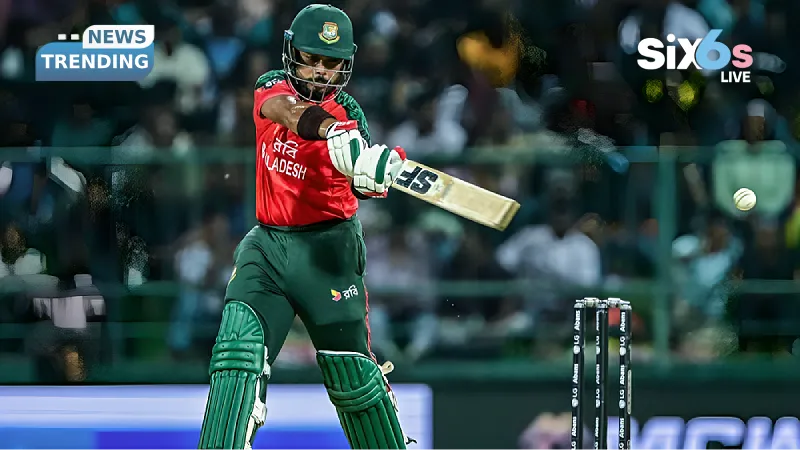
Bangladesh’s T20 selection debates are normally based on players left out of the squad, but this time, it is about where a player has been positioned in the lineup. A player like Parvez Hossain Emon, seen by many for years as an aggressive top-order batsman, is now being trained to bat at number four going into the T20 World Cup. The change in the way Bangladesh is thinking tactically may tell us just as much about how they think today as would have the exclusion of any player in the past.
A deliberate shift, not a demotion
Moving a top-order batsman to number four can be perceived as a compromise. This is most definitely NOT the case with Emon. For the first time, the team management of the Sylhet Titans asked them to drop Emon down the batting order for the Bangladesh Premier League (BPL) so they could assess his ability to bat at a middle-order position, and this was a true example of national and domestic cricket teams actually working together to achieve the same goal. The results were clear: 169 runs at an average of 84.50 with a strike rate of 159.43. Those are not just numbers that show you are surviving; those are numbers that indicate you are having a positive effect on your team.
Left-handed balance changes match the dynamics
In many ways, the batting of Bangladesh has relied heavily on right-handed batsmen in the middle of the game, allowing opposing captains the opportunity to create some clarity when creating match-ups. The arrival of Emon at number four creates an element of uncertainty for Bangladesh’s opponents. His left-hand status as he enters the game post the power play allows bowlers to be forced to make line, fielding, and planning adjustments, all small but impactful changes in Twenty20 cricket.
A selector has stated that “with Emon at four, the batting order looks more balanced.” While balance may suggest an equal distribution of players, it is actually related to being flexible when under pressure. In previous World Cups, Bangladesh have struggled with this flexibility in their batting.
Flexibility as a long-term investment
Rarely do players speak as candidly about their team as Litton Kumar Das did after the Ireland series. The problem with anchoring a player to one role is that they will be predictable. With Emon (and before him, Saif Hassan) being exposed to different types of roles for Bangladesh, the team may be trying to protect itself from the effects of tournament pressure when it arrives.
While Emon’s 33* at No. 4 in the final match of the Ireland series wasn’t eye-catching by any stretch of the imagination, it showed a lot. Emon was able to evaluate his own game, adjust to what was happening on the field, and finish abilities that have been outsourced to luck far too many times by Bangladesh’s middle order.
Squad philosophy over sentiment
The retention of Shamim Hossain in his position from the initial series omission indicates that the selectors have confidence in defined roles. Shamim is seen as a finisher, not as some experiment. The squad has chosen an additional batsman over a fast bowler; this was based upon the Indian conditions, and the slow pitches more so than the theoretical balance sheets.
The team selected on Dec. 31 and submitted to the ICC Jan. 1 represents continuity. No speculative moves were made. No late additions due to sentimental reasons. just players who have been trusted in their positions for at least the past 6 months, and fit into specific game scenarios.
Stay updated on the latest cricket news and exciting updates at Six6slive. Dive into our in-depth articles and analyses to connect with the action today!