
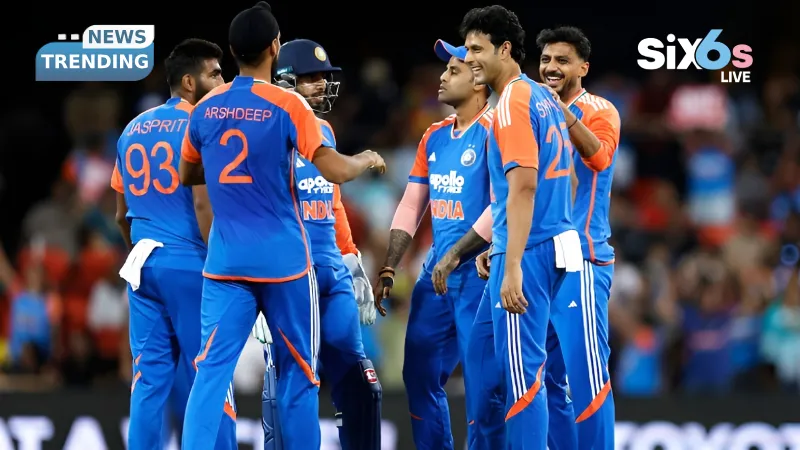
Each World Cup cycle for India is an all-too-familiar tale of being blessed with loads of talent but, unfortunately, having insufficient time to find the perfect combination of players. This time however it appears that the World Cup timing is better than ever; with Shubman Gill cleared to play following the neck injury he suffered during the first test against South Africa and with Hardik Pandya finally recovering from the quadriceps injury he sustained in the Asia Cup, the Indians now appear to be far less like a group seeking answers and are instead becoming a well-rounded unit once again.
Rethinking Balance Through Hardik’s Return
The significance of Pandya’s return to the Indian team goes beyond just providing another option for an all-rounder. His return will allow India to develop its overall structure as a cricket team. The fact that Suryakumar was able to recall how well Hardik bowled in the early part of his overs in the Asia Cup is indicative of India’s need for a seam bowling all-rounder that can provide India with additional length at the bat, while still controlling the ball. With a seam-bowling all-rounder that bowls within the first six overs, India can field an additional finisher, an additional spinner, or simply a more aggressive XI. This gives India the flexibility it needs to be creative with its selections and the ability to take risks on the pitch, two aspects of the game where India has traditionally been cautious.
Gill’s Presence and the Top-Order Domino Effect
When Gill comes back into the team, it does add strength to the top, but more importantly, it will also create some continuity with respect to the batting lineup. The fact that Surya Kumar admitted that Gill was selected for the series in Sri Lanka over Sanju Samson confirms where he ranks in the hierarchy. With the way Gill bats, as a tempo setter, not a slogger, India can dictate how they want to play out their innings rather than trying to chase the chaos of an inning. At this time, when the team is adamant against making changes to a winning core of players, bringing the original opening man back is more about ensuring that the batting lineup has some consistency as opposed to being a matter of personal preference.
Flexibility Becomes a Middle-Order Currency
India’s developing T20 style can be seen in “the skipper’s note that ‘everyone other than the openers must be flexible,’ as Samson has transitioned from being an early-order aggressor to being a floating batter to illustrate the transition: versatility is now a need, not a want. Samson’s ability to play anywhere from No. 3 through No. 6 does two things for India: it provides them with consistency of batting line-up while protecting against potential lineup-based matchup issues. With Jitesh Sharma challenging for the gloves, this space (No. 3-6) will be India’s most fluid yet, most competitive.
India’s upcoming five matches in South Africa will mark a new level of balance and stability for the team after a prolonged period of uncertainty. With Hardik Pandya likely to provide the balance that has been missing, Shubman Gill is expected to stabilise the batting at the top of the order, and the Indian team’s batting order is now prepared to be flexible and adaptable due to the nature of how the batting order has evolved through the years.
Stay updated on the latest cricket news and exciting updates at Six6slive. Dive into our in-depth articles and analyses to connect with the action today!