
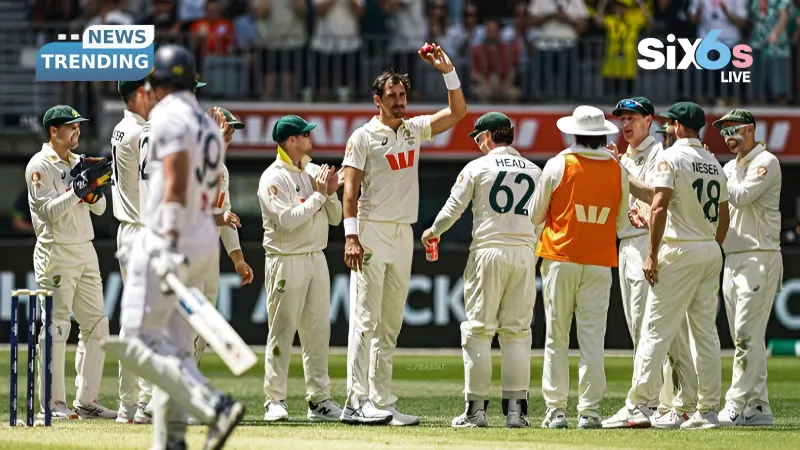
There’s one particularly torturous form of Australian cricketing torment designed specifically for visiting sides, and on Day three, the Englishmen were served up the entire menu at the Gabba. It was Daylight Saving Day itself; the English cricketers had been pleading for the sun to go down so they could escape the heat/humidity, but instead they got an even better gift: a pink ball that swung like crazy and an Australian attack fired up by the new conditions.
The Psychological Violence of a High-Functioning Tail
The most disheartening stat from today was not how many runs were scored per over or the number of wickets taken, but the stats on the scorecard distribution. In just the 12th time in test history that every player in the Australian team hit a double-digit batting average. This clearly shows the absolute dominance of Australia. The fact that Brendan Doggett and Scott Boland can hang around for an extended period of time is clear evidence that the bowling unit has lost all bite.
England’s failure to bowl out the lower order is no longer a technical error but now a persistent illness. Starc scored 77 runs off 141 deliveries in an example of how to use controlled aggression, and passed Stuart Broad on the list of career Test run-scoring by a batsman batting at number nine. However, the partnership between Starc and Boland had broken England’s will as much as anything else. With the skill and experience of a batsman batting in the top order, Starc ensured that Australia did not merely create a 177-run lead; he also ensured that England remained in the field long enough for its opening batsmen to have to bat against the new pink ball under the worst possible light conditions. This was a perfect set-up to trap England.
Expensive Wickets and the Illusion of Competitiveness
Brydon Carse’s bowling figures of 4-152 will be remembered as “the fool’s gold” of Test cricket statistics; for while they do appear to have a solid number of wickets, the volume of runs conceded is so high that those wickets may ultimately prove to be of little consequence. Brydon Carse’s figures epitomise the larger problem England has of being unable to sustain the pressure on their opponents throughout an innings.
Ben Stokes’ visibly frustrated response to what he saw as poor fielding by Jofra Archer displayed the team’s internal tension. The visual display of the captain losing it with his top speedster while the tail-enders were scoring at will showed there was no internal cohesion left for England. They tried every trick they had, including a late, last-ditch single attempt by Will Jacks, which resulted in a boundary being hit before a wicket was finally taken. The internal problems had already caused the damage. They did not allow Australia to reach 511 runs solely based on brilliance; however, they allowed them to do so based on an unpredictable, inconsistently long bowling line and length, which both Starc and the lower order were able to capitalise upon.
With only the bowlers left to support the last man standing in the form of Harry Brook, who was given a life on review, an English innings defeat now appears inevitable. England is facing a potential humiliation of being defeated within four days and is 43 runs behind.
It would appear that Starc has all but sealed a 2-0 victory for Australia and, more importantly, has highlighted the increasing disparity in class and resilience between the two teams. Unless either rain or a miracle intervenes, the Ashes will be gone from England before they know it.
Stay updated on the latest cricket news and exciting updates at Six6slive. Dive into our in-depth articles and analyses to connect with the action today!